
Mayflower Autonomous Ship: A Case Study in Maritime Innovation
The Autonomous Mayflower
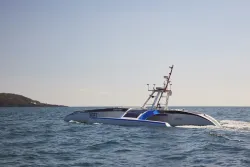
Designed to operate without a crew, the Mayflower Autonomous Ship (MAS) became one of the first fully autonomous vessels to cross the Atlantic.
Powered by Iridium Certus® satellite connectivity, MAS proved that remote navigation, science and command and control (C2) can extend innovation and imagination across the world’s oceans.
The Vision
MAS was created to demonstrate how artificial intelligence (AI) and autonomy could reshape ocean exploration and commercial shipping. The project combined marine engineering, advanced sensors, and global communications to show that an unmanned ship could safely navigate, collect data, and complete a transoceanic voyage.
The Voyage
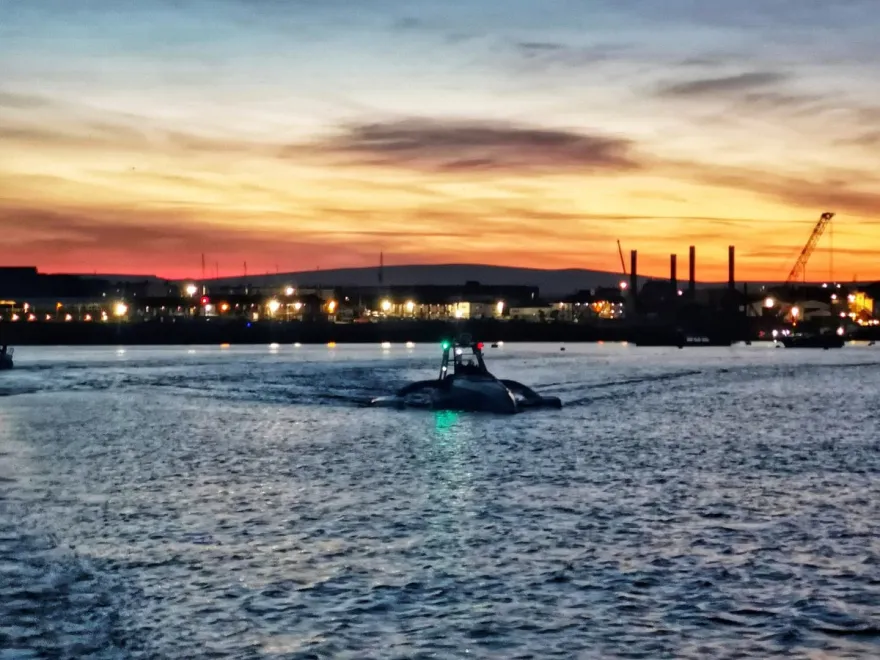
Sailing between two historic ports, MAS charted a course using an innovative AI model called “AI Captain” that continuously evaluated weather, obstacles, and ocean conditions. Onboard sensors collected data on water chemistry and biology, contributing to long-term climate and marine science research. A live mission portal gave the public a direct view into operations, turning a technical experiment into a global showcase of innovation.
Iridium’s Role
Iridium Certus provided the backbone of the ship’s communications. Through the Thales VesseLINK 700 terminal, MAS maintained reliable connectivity across every stage of the crossing. The system supported:
- Real-Time Awareness – Mission teams received continuous situational updates from the vessel.
- Remote Command and Control – Remote monitoring of the vessel’s navigation, power, and propulsion systems and human C2 intervention (if required).
- Broadband Video Transmission – Typically, video streaming requires heavy bandwidth that quickly consumes lots of data, restricting its use to specific scenarios, but Iridium partner Videosoft managed to efficiently deliver the MAS400 video stream through its video compression software technology.
Technology Highlights
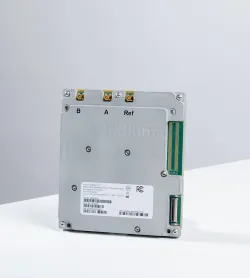
- Resilient Hardware – The Iridium Certus Connected Thales VesseLINK 700 is a compact, solid-state terminal with no moving parts, well-suited for even the roughest seas.
- Efficient Data Handling – Edge computing enabled the onboard AI to process most information locally, reducing satellite bandwidth use to only the most critical transmissions.
- Secure Connectivity – Communications between MAS and mission control were encrypted and protected end-to-end, ensuring both safety and integrity.
Continued Contributions to Ocean Sciences
MAS now serves as a research platform for ongoing projects with leading scientific institutions. Its role has shifted from proving autonomy to delivering real-world insights on ocean health, marine ecosystems, and advanced vessel operations.
The Maritime Autonomous Revolution
MAS shows the potential of satellite-enabled autonomy in the maritime industry, including:
- Commercial Shipping – Offers a blueprint for safer, more efficient operations beyond line of sight.
- Scientific Research – Enables continuous environmental data collection far from shore.
- Defense and Security – Demonstrates how autonomous systems can expand reach while reducing risk to personnel.